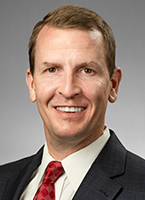
Christopher Day will never be accused of being unambitious.
Shortly after the Hoosier tech entrepreneur was named CEO of Elevate Ventures last summer, he audaciously announced plans to “double Elevate’s activity statewide.” The means doubling the programming conducted and the roughly $15 million annually invested by Elevate, the non-profit venture investment arm of the Indiana Economic Development Corporation.
Out of his desire to think big – really big – the Rally Innovation Conference was born. The event, which Day hatched and is organizing, celebrates cross-sector connections between companies, entrepreneurs, investors and universities from across the globe and features an attention-grabbing $5 million pitch competition. And that’s just the tip of the iceberg for this ambitious enterprise.
“It’s time to think much bigger as a state,” Day emphasizes.
The Rally Innovation Conference isn’t just thinking big. It’s audacious. But no one who knows Day, the founder and former CEO of AI marketing firm DemandJump, doubts he can pull it off.
Day explained the genesis and rolled out his plans for Rally in a recent INChamber podcast episode.
If Day realizes his vision for the event, it would be the second biggest gathering in the state, behind only the Indianapolis 500. And it would rival the size and scope of the now famous South By Southwest (SXSW) Conference & Festival in Austin, Texas.
Heading into its inaugural year, the Rally Innovation Conference, to be held August 29-31 at the Indiana Convention Center in downtown Indianapolis, is being billed as the largest global cross-sector innovation conference.
“In year one, our goal is to have 5,000 attendees, and we will probably look to chart the course for future years by the end of this year. But in my mind, I’m thinking that we should be in the 100,000 (attendee) range by year five … which we think is very doable,” Day exclaims.
The growth wouldn’t stop there.
At the conclusion of the event’s first decade, Day expects 250,000 attendees to descend on central Indiana for Rally, which could expand beyond its current three-day format.
In this first year, Day and his partners – which set up an independent organization, Rally Innovation LLC, to run the event – have a packed agenda.
“In addition to a $5 million pitch competition, we’ll have a demo arena, one-on-one investor and company meetups, workshops, mentor shops, there’s going to be three keynotes, over 200 speakers and 50 content sessions,” Day says.
The Rally conference will focus on software, hard tech, health care, sports tech, ag and food, and entrepreneurship. Day says he’s close to announcing the 2023 keynote speakers and promises they will be household names.
If Day’s vision turns to reality, not only would Rally become a huge event for entrepreneurs, tech start-ups and scale-ups and venture firms looking for hot, new investment targets, it would have a tremendous economic impact on the entire central Indiana region, including hotels, restaurants and bars, transportation companies, retailers and other attractions.
The economic impact of any event is tricky to calculate. While size of the audience matters, the demographics of that audience matter as much. The amount of transportation and accommodations required, and the types and quantity of food and alcohol consumed all play a part.
But for context on what Rally could mean for central Indiana, the annual FFA (formerly Future Farmers of America) convention in Indianapolis drew a pre-pandemic crowd of 65,000 and created a $40 million economic impact, according to city and state officials.
GenCon, a gathering of gamers from around the country, had pre-pandemic attendance of nearly 70,000 in Indianapolis and generated an economic impact of more than $70 million, according to GenCon and Visit Indy officials. For those huge events, virtually every hotel in Indianapolis and the surrounding counties is sold out, with hotels as far away as West Lafayette and Bloomington getting bookings.
Given the demographics and global reach expected with the Rally event, the per-visitor spending of that gathering would likely mirror – or potentially top – that of GenCon.
If the event reaches Day’s year 10 goal, Rally could create the highest influx of visitor dollars of any event in Indiana. It could rival the Indy 500’s visitor spending because while the open-wheel race is mammoth (estimated attendance of 300,000-plus), a sizable chunk of that crowd is from within the state, whereas Rally is expected to draw a large contingency from outside Indiana.
An event like that would have a multi-multi-million dollar budget, but Day is confident he can raise the funds through sponsorships, partners, ticket sales and other revenue streams.
Already, Day and his Elevate Ventures team have landed some heavy-hitting partners, including AgriNovus, Butler University, gener8tor, The Heritage Group, High Alpha, Indiana Chamber of Commerce, Indiana Economic Development Corporation (IEDC), Indiana Technology & Innovation Association and Purdue University to name a few.
Day says Rally could not only put the spotlight on central Indiana as the biggest, best tech hub in the Midwest but position it as one of the best in the country not only for tech, but for business overall and too as a place to live.
After all, he asserts Indiana has much to be proud of and to tout to employers and workers.
“When we think about technology, we’ve had nearly $10 billion in tech exits in less than the last 10 years,” Day states. “(We’re) home of Salesforce, arguably the greatest (software-as-a-service) company of all time. (Salesforce’s) second largest physical presence in the world is right here on the Circle in Indianapolis.
“When we think about lifestyle, we have the world’s largest children’s museum. We host the Indianapolis Prize, which is the largest animal conservation award in the entire world. We’ve had places, like Fishers and Zionsville, that are the safest places to live. The most affordable city to live in the country is Fort Wayne. The best place for a new job is West Lafayette. When we think about cost of living, we’re No. 1 for renters. We’re No. 1 (best place) for first-time home buyers. When we think about regulatory environment, we have the No. 1 ranked regulatory environment (as rated) by Forbes. And over all of that, collectively this year we were ranked No. 1 by Forbes as the best state to start a business,” he lists.
“We have more No. 1, top five, top 10 rankings collectively than any other state that I can find in seven different categories.”