

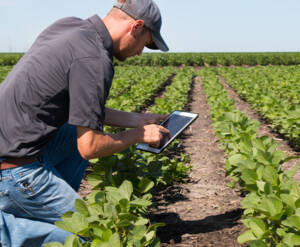
 Digital technologies in agriculture, including precision agriculture, can substantially increase crop and animal yields, improve distribution and reduce input costs.
Without reliable, affordable high-speed internet connectivity at both the farmhouse and in the field, however, many of these technologies cannot realize their full potential, says a 2019 United States Department of Agriculture report titled Insights on Rural Broadband Infrastructure and Next Generation Precision Agriculture Technologies.
Advanced devices, precision agriculture and robotic systems are essential elements to an agricultural industry that contributes an estimated $31.2 billion to the Hoosier economy, along with nearly 200,000 jobs (including just over 94,000 farmers). Indiana is the eighth largest agricultural exporter in the nation at just over $4.6 billion (2018) and more than 80% of land in Indiana is devoted to farms, forests and woodlands.
With its current status and rich tradition, Indiana is positioned to remain a leading agricultural state and enhance its position if it takes the next steps to modernize. Further, property values increase where there is a prevalence of advanced technology, which benefits future generations of farmers by allowing them to be competitive globally.
The Indiana Chamber applauds the Holcomb/Crouch administration’s attention to rural broadband and efforts to connect more rural Hoosiers to high-speed broadband, which likely has never had a higher demand due to the recent rise in at-home working and learning.
The question now becomes: How can the state partner with the private sector to connect more farms, farmers and agricultural operations?
- Purdue recently added the Convergence Center for Innovation and Collaboration to its Discovery Park District, which will serve as a collaboration hub for some of the state’s ag giants and start-ups alike seeking to work with Purdue.
- According to Elevate Venture’s “1H 2020 Indiana Venture Report,” the largest venture capital deal in Indiana was a $45 million round by Inari Agriculture, which has a presence at the Purdue Research Park. The funds will be used by Inari to accelerate the development and commercialization of breakthrough gene-edited crops that address the challenges of climate change and improve productivity.
- AgriNovus Indiana, the state’s agbiosciences initiative, launched the state’s first agtech innovation challenge, bringing together leaders in production agriculture and technology to fuel innovation.
- AgrIInstitute recently commenced its 2020 Agricultural Leadership Program, which involves a series of seminars that are designed to increase the knowledge and enhance the leadership skills and expertise of its participants.
- Ivy Tech continues to grow its Precision Agriculture Equipment Technology program, which offers students state-of-the-art laboratories equipped with the newest on-board equipment, as well as tractors, combines, sprayers and more.