

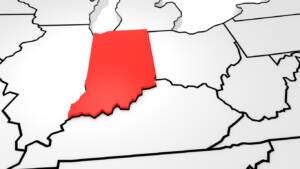
Gov. Eric Holcomb recently announced another record-breaking year for economic development in Indiana. In a statement released by his office, Holcomb noted that 218 companies committed to locate or expand in Indiana, investing more than $22.2 billion in their operations and creating 24,059 new jobs.
“Indiana’s economy is firing on all cylinders,” he says. “These investments and job commitments will transform our high-tech industries and ensure that Hoosiers are at the forefront of the 21st century economy. Our strategic focus on advancing entrepreneurship, innovation and quality of place is igniting our neighborhoods and communities statewide, providing more opportunities for Hoosiers and their families to thrive.”
Legislation passed earlier this year authorized Innovation Development Districts (IDDs), which enable the Indiana Economic Development Corporation (IEDC) to work with local governments to establish sites for large-scale economic development projects. The Indiana Chamber anticipates the statute will be modified somewhat in the coming session, but its intent will not change. Without question, IDDs bolster Indiana’s ability to move at the speed of business by ensuring the availability of shovel-ready sites for companies looking to relocate or invest in operational improvements in Indiana.
It also signals to industry stakeholders that Indiana intends to be a friendly place for businesses, thus reducing the risk of investments. Governor Holcomb’s statement suggests the message is being received. Capital investment commitments in 2022 grew by more than 260%, unprecedented in the state’s history.
It remains important that Indiana continue to recruit companies and investments, but more importantly are the types of jobs that will be created. Higher wage jobs will result in a growing tax base at the local and state levels. Fortunately, the IEDC has discretion when it comes to those who receive incentives and can use prospective job wages as a deciding factor.
Again, Holcomb’s statement implies the IEDC has used its discretion wisely. The average hourly wage of those more than 24,000 committed jobs is $34.71, which is 27% more than the state’s current average wage. This marks the highest capital investment and annual record for average wages since the IEDC was established in 2005.
Wednesday’s announcement also included commentary from Secretary of Commerce Brad Chambers : “Indiana continues to lead in building the economy of the future. Our strategic initiatives and focus are attracting first-of-their-kind investments from innovative businesses around the world while enabling growth and innovation in future-looking industries like semiconductor fabrication and design, electric vehicles and batteries, life sciences, agbiosciences and future industry. These efforts will pay dividends for generations to come, creating high-value, high-quality jobs in our communities.”
On the eve of the 2023 budget session, lawmakers and stakeholders can expect the Governor’s legislative agenda to include initiatives that further his “economic roadmap,” which is designed to place Indiana “at the center of the future, global economy.” The Chamber agrees that an integral part of this plan must be attracting and retaining top talent and creating a quality of place that provides more opportunities for all Hoosiers.