

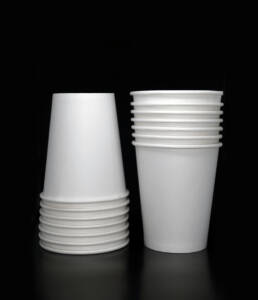
Turns out I’ve been underestimating the power of Dixie cups. Sure they’re portable, disposable and practical. But Dixie cups have a fascinating back story.
A Fast Company article titled How Dixie Cups Became the Breakout Startup of the 1918 Pandemic reveals, for instance, that they initially were called “Health Kups.” Created in 1907 by a Boston attorney, they didn’t gain popularity until more than a decade later as a way to prevent the spread of disease. The story also contains lessons for today’s entrepreneurs about timing and adapting.
An excerpt:
Before the Spanish flu hit, the company behind Dixie cups was a scrappy startup. But just as we’ve seen with the teleconferencing phenom Zoom in the COVID-19 era, Dixie cups shot to popularity with the arrival of a major health crisis. That’s why the Dixie cup’s story is instructive for startups struggling to make ends meet during the COVID-19 pandemic. Embedded in the history of Dixie cups are important lessons for how startups can scale when times are good – and survive when times are hard. …
As any VC will tell you, timing is one of the crucial stars that must align for a startup to succeed. But what if timing isn’t right for a startup?
Chances are, timing won’t be exactly right. To succeed, you must survive until it is.
When (Lawrence) Luellen invented the paper cup, which he originally named the “Health Kup,” the timing wasn’t great either. Communal metal drinking cups known as “tin dippers” were commonplace. A single “tin dipper” could be shared by hundreds of different people. If that sounds gross, it was. But scientists were only just beginning to understand how contagion was spread. As a result, when Luellen and his cofounder Hugh Moore went to market with their paper cups, the product didn’t fly off the shelves. It’s hard to sell a solution to a problem people don’t know they have. …
When Dixie cups originally failed to resonate with consumers, Luellen and Moore refocused their efforts on businesses. They developed a free-standing dispenser that was sold to businesses, which could sell a Dixie cup of water for a penny. Once a business bought a dispenser, Luellen and Moore could depend on revenue from the repurchase of cups. This helped the company survive during what was a slow period of adoption. It also introduced Dixie cups to thousands of workers who would soon begin buying them in stores for home use. …
(During the Spanish flu in the U.S. in 1918), suddenly, drinking out of a disposable cup became a matter of life and death. In response, Luellen and Moore launched an advertising campaign to drive the point home and rebranded from the Health Kup to the more memorable Dixie cup in 1919.
“No matter how clean it may look, the soda glass is a common carrier of disease,” one 1920 ad read. “Uncounted lips touch it. Uncounted germs cluster and breed upon its rim – the germs of influenza, pneumonia, diphtheria, and worse.”
As awareness of the health risks grew, more states also banned the use of “tin dippers,” and this made Dixie cups even more popular. COVID-19 may have a similar impact on telehealth startups. Already payers have significantly expanded coverage for telemedicine, HIPAA requirements have been relaxed, and some states have lifted state licensure requirements.
 Symone Skrzycki is the senior communications manager for the Indiana Chamber. She is also a senior writer for the Chamber’s award-winning BizVoice magazine and has been with the organization for 20 years.