
When you may think about freeze-drying, your thoughts probably drift toward coffee or perhaps a packet of less than maximally appetizing food carried in a hiker’s backpack.
But when Alina Alexeenko ponders the freeze-drying process, her mind turns to vaccines, outer space and a whole host of tasty food items including popular children’s snacks.
Alexeenko, a Purdue University professor of aeronautics, astronautics and chemical engineering and a co-director of Purdue’s William D. Young Institute for Advanced Manufacturing of Pharmaceuticals, began her career working on the way rocket engines work at high altitudes and on sensors that measure fluid behavior on a nanoscale. How that happens works differently when the engines are in the vacuum of space rather than on a planet with gravity and atmosphere. And that, in a way, is how she got involved in the technology of pharmaceutical freeze-drying, called lyophilization.
“I got an email about software I had developed as a grad student,” Alexeenko recalls. “An engineer asked me a very specific question about it, about calculating the viscosity of nitrogen and water vapor mixture under very strange conditions. I responded and helped him, but then I was curious and asked what he was working on. And it turned out he was working on lyophilization equipment.”
Lyophilization safely and gently pulls water from substances while subjecting them to a spacelike vacuum, leaving them with a long shelf life and making it easy to bring the dehydrated items to their original state.
The process was developed during World War II to preserve blood products and penicillin. Now the process is used to ship drugs and vaccines long distances without having to be stored in refrigerators or freezers.
Alexeenko and her Purdue team have advanced the lyophilization techniques by applying rigorous fluid dynamics, advanced manufacturing techniques and automated systems to control and optimize the environments in which it takes place.
Admittedly, this is complicated stuff, but it has some very practical and important applications.
“There’s a joke that freeze-drying is rocket science,” Alexeenko says. “But it’s hardly a joke. It is indeed complicated. It is critical to understand the science behind it and combine knowledge from many fields to build reliable systems that function under extreme environments.”
Not surprisingly, Alexeenko is a pioneer in her field. In the early 2000s, she was one of a handful of fluid mechanic experts involved in the field. Her work and collaborations led her to co-found LyoHUB in 2014 with Elizabeth Topp, professor of industrial and physical pharmacy, in Purdue’s Birck Nanotechnology Center.
Soon, top academics as well as experts from the private sector, including pharmaceutical companies, software engineers and equipment manufacturers sought to team up with Alexeenko’s team to advance freeze-drying techniques and technology. LyoHub officials have established the now industry-recognized best practices for this type of freeze-drying.
When they’re not working on vaccines and medicines, the experts at LyoHUB tackle another pressing issue: snacks. Freeze-drying fruits, vegetables and other foods is a way to preserve their vitamins and nutrients while freeing them from the need to be refrigerated and preserving their shelf life.
While astronauts have relied on freeze-dried food for years, they’re not the only ones who find them appealing. Parents have found that snacks like freeze-dried strawberries and bananas can be appealing to children even with the most finicky pallets. The problem is, they can be pricey. LyoHUB officials think their advances in technology could lower those prices in years to come. Farmers, meanwhile, are keen on freeze-drying as a way to increase shelf life, especially for fruits with a short harvest season, like Indiana’s watermelons.
“We are working to make the process more efficient, more reliable, faster and more affordable,” Alexeenko emphasizes. “We have so many projects where we are working with partners to advance the technology.”
The technology is so potentially versatile, Alexeenko says, that her work on space-based projects includes a system for freeze-drying and cleaning wastewater on the space station and a very small rocket engine powered by pure water that will soon be tested on a Blue Origin spaceflight. Those novel applications, say industry experts, could be just the tip of the freeze-dried iceberg.
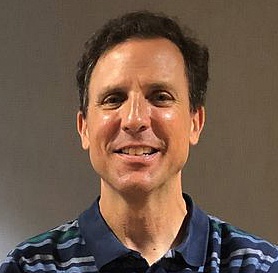 Anthony Schoettle is the director of communications for the Indiana Chamber. He started with the Chamber in 2021 after a long career in journalism. He’s won multiple awards for his storytelling ability on a wide range of business topics.
