
Grandparents on demand, home-cooked meals and theater tickets are just part of a recently announced incentive package aimed at luring workers to Greensburg.
City officials there are hoping to capitalize on a paradigm shift that has increasingly seen municipalities changing the way they approach economic development.
Gone are the days when economic development officials merely hunted for companies to bring in scores of jobs. With the number of permanent remote workers more than quadrupling since the COVID-19 pandemic swept the country, a fast-growing number of city, county and state officials are trying to lure individuals who will bring their job – and the resulting economic impact – with them. The Indiana Chamber was a leading advocate for legislation calling for a state-based remote worker incentive during the 2021 legislative session; the issue will be back as a top priority in 2022.
An Indianapolis tech-enabled company, MakeMyMove, has stepped onto the scene ready to cater to remote workers and the growing number of communities trying to attract them.
MakeMyMove, which was started by Angie’s List co-founder Bill Oesterle and former Angie’s List executive Evan Hock, has created a first-of-its-kind marketplace where cities, regions and states can list their incentive offers for remote workers looking for a new home and where workers can compare offers and shop for the best deals.
But MakeMyMove does much more than produce an online listing of incentives. Hock said the start-up also provides data analytics, helps communities build incentive programs, works with communities to build target pools of workers in specialized fields, builds marketing campaigns to help communities engage workers, brokers introductions between communities and remote workers, and facilitates logistics of a transaction.
“We’re seeing a lot of creativity in these incentive packages,” Hock says. “We’re seeing Indiana communities become a nationwide leader in this.”
West Lafayette, Bloomington and a cluster of counties – including Orange, Davies, Dubois and Greene – in southwest Indiana are among the areas offering incentives to workers. Several communities in central Indiana are also pondering the strategy.
Greensburg, Hock states, is “the exemplar of this movement.”
Because of its new one-of-a-kind incentive package, which is designed to recruit new residents who truly want to integrate into and contribute to the community, Greensburg has been awarded the first “Neighbor Makers Award” by MakeMyMove.
In recognition, Greensburg will receive a special designation on their town page at MakeMyMove.com and custom welcome mats to give their new residents.
The move to what is referred to as “retail economic development,” started about two years ago. There’s good reason for the economic development strategy shift.
A recent MakeMyMove survey found that nearly 60% of remote workers will find a new job if employers end virtual privileges. Almost one-third say they are either “likely” or “somewhat likely” to move to a new city or town in the next 18 months while continuing to work remotely. And, while 43% cite moving expenses as a barrier to relocating, 50% of those surveyed said they would consider permanently relocating if offered $10,000 and the community has the amenities they are seeking.
“We’ve been observing this shift to remote workers for a while,” Hock said. “There were five million remote workers in the U.S. pre-pandemic, and now there are some 40 million that are expected to stay remote post-pandemic. Every week we hear of new companies announcing they are going full-time remote. We think this is an enduring trend.”
Among the companies now offering permanent remote work options are Salesforce, PricewaterhouseCoopers, Ford Motor Company, Nationwide Insurance and Zillow.
Tulsa, Oklahoma was one of the first municipalities to offer incentives to relocating remote workers, many of them in the tech sector, with an offer of $10,000. In three years, Tulsa officials said they’ve attracted more than 1,100 – mostly affluent – workers to the area.
“We’re seeing dozens of cities offering $5,000 to $10,000 relocation incentives to workers,” Hock says. “Now, we’re seeing communities offering more non-monetary incentives. That’s where Greensburg shines.”
Not only do the creative incentive packages make it known that communities are serious about attracting remote workers, it’s also a good marketing and public relations tool, Hock stresses.
“Some of these incentive packages are eye-opening and attention-grabbing,” he says.
In addition to offering $5,000 to offset moving expenses, Greensburg’s relocation package includes:
- “Grandparents on-Demand” babysitting services and Grandparents Day stand-in at school provided by local couple Tami and Dan Wenning
- “Seat at the Table” invitation to Greensburg’s nonprofit fundraising events, including its annual Gala in support of Decatur County Memorial Hospital
- Open invitations to home-cooked meals at neighbors’ homes
- One year membership to the town’s local co-working space
- One year membership to the local YMCA
- Free gift cards to the seasonal farmers’ market
- Free passes to theatrical performances at Tree County Players
In the two weeks since Greensburg rolled out its incentive package, it has 800 relocation applicants.
“Greensburg has always been a welcoming community for anyone that wants to live, work and play here but with this package, we are going a step above to ensure that people have the opportunity to really embrace all that Greensburg has to offer,” says Greensburg Mayor Joshua Marsh. “That is why we created an incentive package uniquely tailored to incorporate all of the amenities that make our city special.”
There’s a secondary benefit to these types of incentive packages. They assure that the new transplants are interwoven into and become actively involved into the community where they relocate, Hock says.
“With 30% of people who have become remote workers planning to move in the next year and a half, we’re talking about tens of millions of people that are getable,” Hock states. “These people are seeking out a lifestyle, and it’s an opportunity for communities to pitch their wares and tell their stories.”
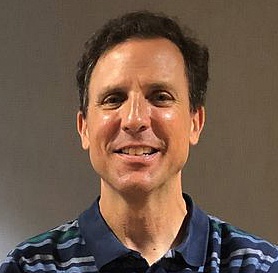 Anthony Schoettle is the director of communications for the Indiana Chamber. He started with the Chamber in 2021 after a long career in journalism. He’s won multiple awards for his storytelling ability on a wide range of business topics.
