
By Anthony Schoettle
In 2015, when I wrote about electric cars racing at the Indianapolis Motor Speedway (IMS), it seemed a bit far-fetched.
The article I penned for the Indianapolis Business Journal chronicled the growing popularity of the new all-electric Formula E race series and noted that some racing insiders were talking about electric open-wheel cars competing on the famed 2.5-mile oval at Indy.
The discussion in 2015 primarily revolved around a Formula E race being held at the IMS. Though that never happened, it seemed a little more plausible.
Speedway President Doug Boles told me in 2015 the Formula E series “is absolutely worth paying attention to.”
Still, six years ago few people were seriously talking about electric cars racing for the Borg Warner Trophy on Memorial Day weekend in Indianapolis. That right was reserved for ethanol- and high-octane racing fuel-burning race cars capable of generating massive amounts of horsepower. Numerous racing purists told me no one would enjoy watching cars that didn’t have roaring engines. If you’ve ever driven or ridden in an electric car, you know it quietly hums more than roars.
Enter Roger Penske. The racing veteran and business behemoth bought the Indianapolis Motor Speedway in a deal that was finalized in early 2020. Penske is driven by a unique mix of tradition-loving and future-embracing genius.
Penske, who also owns and operates a car sales and logistics empire, is high on technology. He’s poured more than $20 million into IMS improvements – many high tech – that benefit racers and fans alike.
His most audacious move may be what he plans for the race cars themselves.
Penske has made no bones about it: IndyCar must advance technologically. Because he owns a huge auto dealership company, he knows the cars on the track at IndyCar races – including at the Indianapolis 500 – must mirror the cars he sells on his lots.
Not only does that dynamic keep the race series relevant, but it also helps sell passenger cars and trucks as well. It’s long been an axiom in racing circles: “What wins on Sunday, sells on Monday.”
Penske is also keenly aware that automotive innovation has been part of the Speedway’s tradition for decades. The rearview mirror, seat belt, disk brakes and fuel-injection engines all trace their roots to the famed Brickyard.
Penske drove his point home at the Indiana Chamber’s annual awards dinner November 9; Penske was the featured speaker in a one-on-one interview with Gov. Eric Holcomb. The racing icon long known as The Captain says he’s surprised by the speed with which electric vehicle technology has advanced.
“Electrification is going much faster than I would have ever thought,” Penske told the crowd at the Indiana Convention Center. “You’re going to see every single manufacturer by 2025 … will have at least one model electrified in each one of their lines that they have. That’s going to happen for sure.”
And Penske isn’t one to let technology pass him – or his business enterprises – by.
“We’re looking at hybrid and electric (for the IndyCar Series) because obviously it’s something that we have to be conscious of the technology as it’s coming at us,” Penske states.
Penske is doing more than merely looking at the possibilities.
IndyCar is set to begin testing hybrid engines next spring, with an eye toward introducing race cars powered by a combination of traditional race fuel and electric power in 2023.
But Penske took it a step further. He called hybrid technology a “bridging strategy” and said cars – sold on lots and raced on the track – will soon be all electric.
I can hear the groans coming from hardcore race fans. After all, can electric cars really be as fast as those burning high-octane racing fuel? IndyCar officials insist on-track performance will not suffer in the transition to a higher-tech and greener race car.
As part of the rule changes, IndyCar is aiming to introduce 2.4-liter hybrid engine which produces 800 horsepower by 2025. Keep in mind, since 2012, IndyCar has run with 2.2-liter twin-turbo V6 cars, producing 550 to 700 horsepower on track. The new hybrid engine could be boosted to north of 900 horsepower, sources say, which would rival the horsepower of Formula One cars.
That type of technological leap might even lure new fans, suppliers and sponsors to the IndyCar Series. Already engine suppliers Honda and Chevrolet are on board with the hybrid movement, and IndyCar officials are working to attract a third engine supplier and hybrid technology providers to the sport.
Hybrids and electric-powered cars may not be the end of the evolution. “Hydrogen is now real,” Penske says. “We’re running trucks right now to deliver cars on the West Coast that are using hydrogen.”
Penske doesn’t pretend to have a crystal ball. But he knows one thing for sure.
“We’re going to be able to pivot,” Penske emphasizes. “We’ve got the right people, and one thing we do know, we’re not technically challenged, because we love to be challenged every day.”
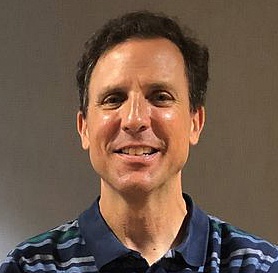 Anthony Schoettle is the director of communications for the Indiana Chamber. He started with the Chamber in 2021 after a long career in journalism. He’s won multiple awards for his storytelling ability on a wide range of business topics.